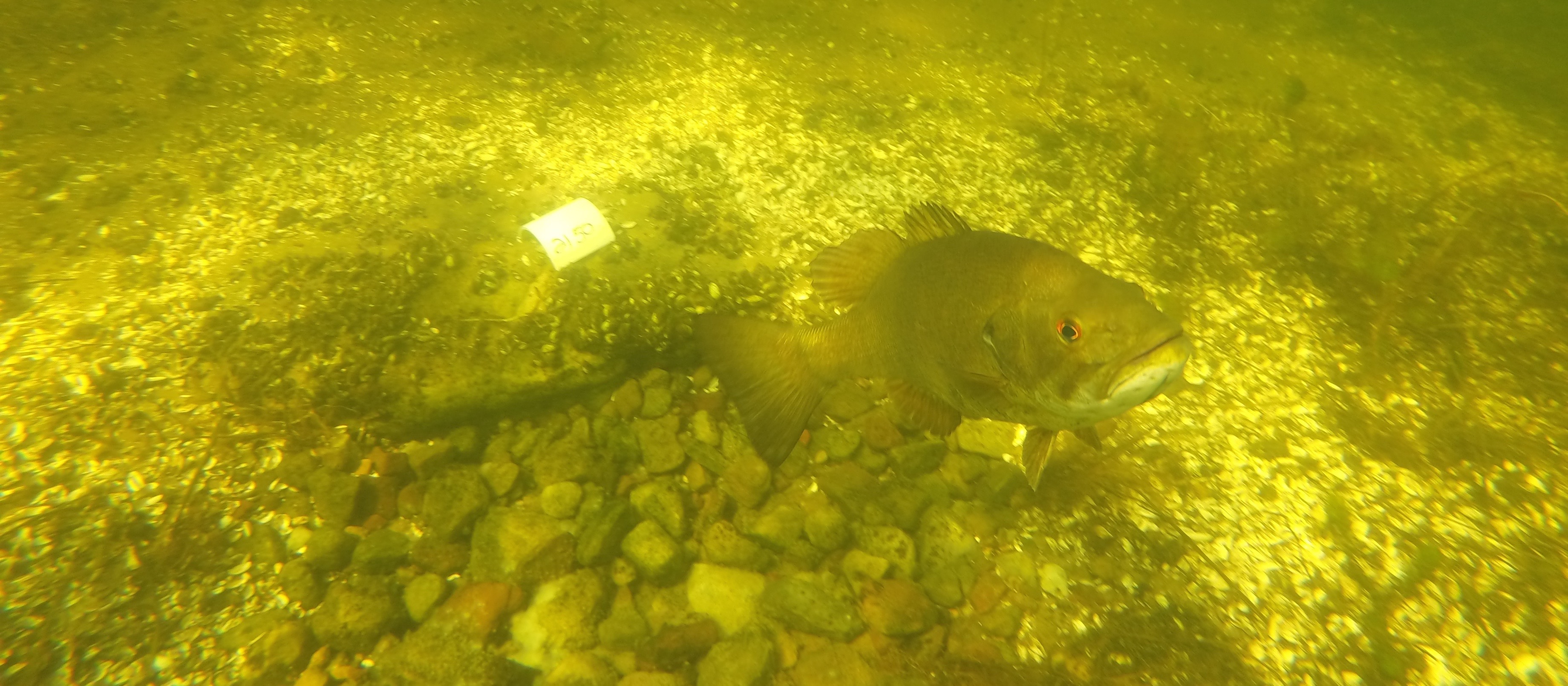
At the Queens University Biological Station, Cooke Lab students spent almost the entire month of May studying the parental care behaviour and energetics of nest-guarding smallmouth bass. For one project, tri-axial accelerometer loggers were affixed to the back of the fish and used to measure fine-scale behaviour such as fanning the eggs, burst swimming, resting, and feeding time over the course of three days. Fish were subjected to three treatments which included a control group, a flashlight treatment shone at midnight on nests to mimic vehicular traffic, and a dock light treatment where solar lights were set up three metres away from nests. The goal of the project is to gain a better understanding of the potential impacts that light pollution could have on nesting behaviour. There has been little research conducted looking at the impacts of light pollution on aquatic ecosystems. Light is pervasive, as shorelines continue to become developed and people light their docks and cottages, there is a likelihood of increased light pollution. Data analysis will continue for several months and the project will be the undergraduate thesis of Environmental Science student Jordann Foster.
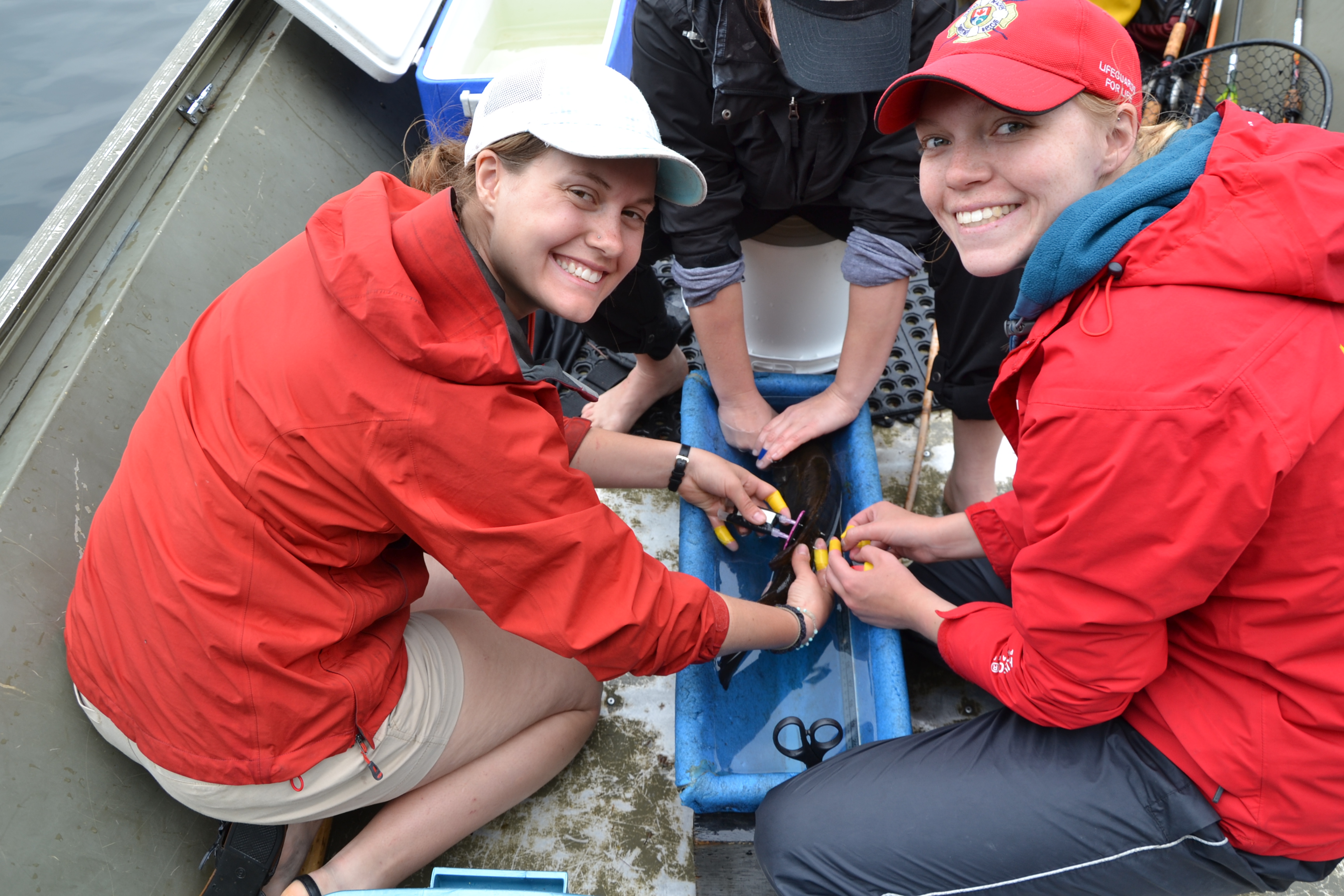
Jordann Foster and Emma Cooke affix an accelerometer to a smallmouth bass